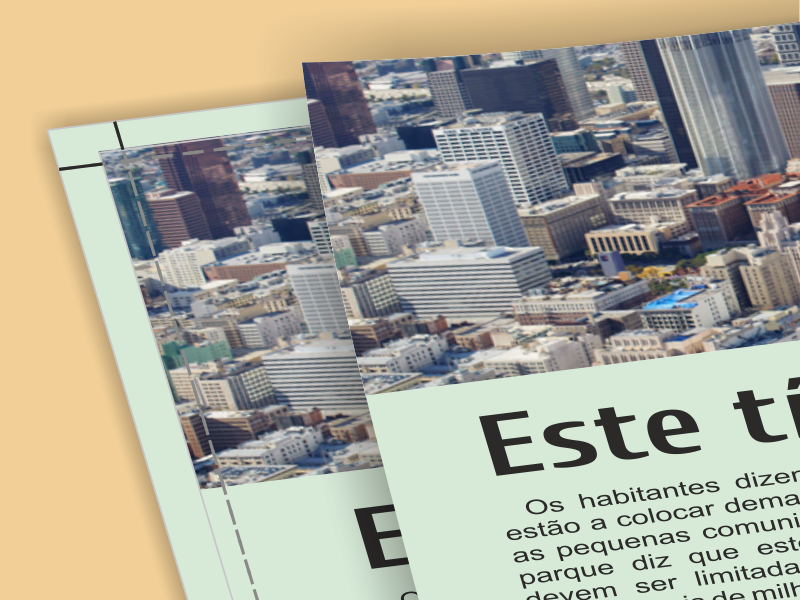

We always have to "trim" the sheets we print, that is, at the finalization we cut with the guillotine the whole printed stack, book or magazine, so that the work looks good. But often there are pictures or color backgrounds that go to the cut, that is, the printed area reaches the limit of the paper, without leaving any margin.
To achieve this the picture or color background has to surpass the cuts, otherwise there is the risk, at the minimum misfortune, of an involuntary white margin to appear. Thus, the designer always foresees an outer margin that will be cut in the trim, usually two or three millimeters, which is called the bleed or to have in excess to cut.
In the image above you see bound by the dashed line the zone where the guillotine will cut, signalized by external traces called crop marks, which are used to position the blade. You can also see the border of the picture that will be cut.
The problem is that we get many jobs done at home or in the office by people with little graphic training. Usually they don't know about the bleeds and then the graphic design department has to find a remedy to the situation, often increasing the pictures and other printed areas a little so they can have something in excess to cut.The situation is so common that, almost always, when receiving a job, the first question is: Does it have bleeds?